Quick Verdict: DJI Mini 3 Pro vs Mini 4 Pro
Buying new today, at roughly the same price? Get the DJI Mini 4 Pro. It’s the better drone for almost everyone. You get all-around obstacle sensing instead of front-and-back only, a stronger and more stable video signal, 4K slow motion, and 10-bit color. All of it fits in the same 249-gram body that skips FAA registration for hobby flying. The camera hardware is nearly the same on both, so the real upgrade is safety, signal, and more room to be creative.
The Mini 3 Pro wins in just one case: when you find it clearly cheaper (used, refurbished, or a clearance bundle) and you mostly fly in open spaces. At $100 or more off, it’s the smart-money pick.
One more thing most older comparisons miss. DJI released the Mini 5 Pro in September 2025, and it uses a bigger 1-inch camera sensor. So in 2026, the honest answer to “Mini 3 Pro or Mini 4 Pro?” is sometimes “neither, get the Mini 5 Pro” and sometimes “grab a cheap Mini 3 Pro and save the cash.” We’ll show you which group you’re in.
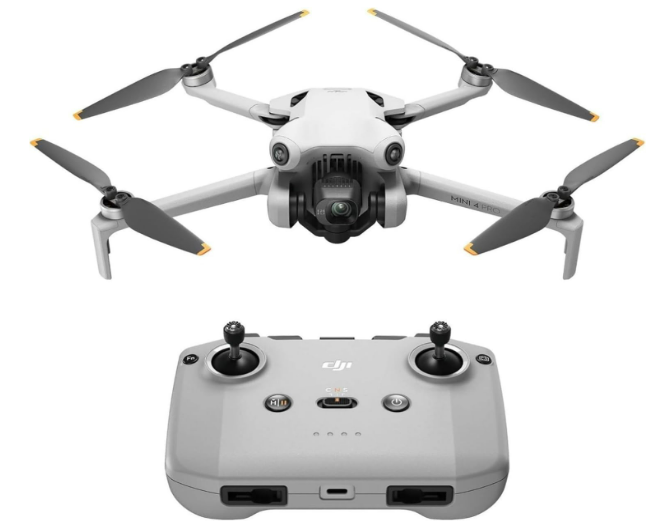
Tested score (Mini 4 Pro): 9.1 / 10. Bottom line: the most capable sub-250g drone you can buy near $759, and the right pick over the Mini 3 Pro unless the older model is on a real discount.
| Best all-rounder | Best value if discounted | Best camera |
|---|---|---|
| Check Mini 4 Pro price on Amazon | Check Mini 3 Pro price on Amazon | See the Mini 5 Pro |


DJI Mini 3 Pro vs Mini 4 Pro: Full Specs Comparison Chart
Prices as of July 13, 2026. Drone stock and prices move fast, especially in the US right now (see the availability section). Always click through for the live price.
| Spec | DJI Mini 3 Pro | DJI Mini 4 Pro |
|---|---|---|
| Launch price (base controller) | $759 (DJI RC) | $759 (DJI RC-N2) |
| Typical 2026 price | Hard to find new; about $589–$749 used | About $759 base / $1,099 Fly More |
| Takeoff weight | Under 249 g | Under 249 g |
| Camera sensor | 1/1.3″ CMOS, 48 MP, 24 mm, f/1.7 | 1/1.3″ CMOS, 48 MP, 24 mm, f/1.7 |
| Max video | 4K/60fps (HDR capped at 4K/30fps) | 4K/60fps HDR + 4K/100fps slow motion |
| Color profiles | Normal, D-Cinelike | Adds 10-bit D-Log M / HLG |
| Obstacle sensing | Tri-directional (front/back/down), APAS 4.0 | Omnidirectional, APAS 5.0 |
| Transmission system | O3, up to 12 km, 1080p/30fps feed | O4, up to 20 km, 1080p/60fps feed |
| Flight time (standard battery) | 34 min | 34 min |
| Flight time (Plus battery) | About 47 min (goes over 249 g) | About 45 min (goes over 249 g) |
| Smart flight modes | FocusTrack, ActiveTrack 4.0, MasterShots, QuickShots | Adds ActiveTrack 360°, Waypoint Flight, Cruise Control, Advanced RTH, Night Shots |
| Warranty | 1-year limited; DJI Care Refresh optional | 1-year limited; DJI Care Refresh optional |
Sources are listed at the end. Where DJI’s marketing and independent testers disagreed, we used the independent number.
In a hurry? Check the live Mini 4 Pro price on Amazon or compare it to the Mini 3 Pro here.
Why Choosing Between the Mini 3 Pro and Mini 4 Pro Is So Hard
Here’s the trap most buyers fall into. You catch the drone bug, watch a few reviews, and land on the two “Pro” Minis. They hit the sweet spot: a real camera, real obstacle avoidance, and a weight under the 249-gram line that keeps hobby flying paperwork-free in the US and most of Europe. Then you freeze. The two drones look almost the same, launched at the same $759, and every spec sheet throws a wall of numbers at you without saying which ones you’ll actually feel in the air.
So let’s keep it simple. Almost everything that matters here comes down to four things: how safe the drone is around obstacles, how far and how reliably the video signal holds, what the camera can do beyond the basics, and how much you pay. The rest is noise.
How We Compared the Mini 3 Pro and Mini 4 Pro
We have not flown these two drones side by side in our own test, and we won’t pretend we did. Instead, this comparison pulls from three sources, and we’ll tell you which claim came from where:
- Official DJI specs from the product pages and spec sheets, for the hard numbers (sensor, transmission, flight time, weight).
- Independent reviews and hands-on tests from trusted drone sites (UAVCoach, The Drone Girl, T3, and others), for how those numbers feel in real flying.
- Real owner feedback from DJI’s forums, MavicPilots, and retailer reviews, for the faults that only show up after months of use.
Our full scoring rubric, and how the Mini 4 Pro earned its 9.1, is at the bottom of this page. No mystery numbers.
The one thing we can’t give you: a same-day, same-place low-light and range flight with both drones. If you own either one and can share that, it’s the single piece of first-hand data that would make this page unbeatable. Send it our way.
Obstacle Avoidance: Tri-Directional vs Omnidirectional Sensing
This is the headline difference, and it’s a real one.
The Mini 3 Pro uses tri-directional sensing. It sees forward, backward, and down. Fly it at a tree and it stops and hovers. Good. But it’s blind to its sides and to anything above it. Drift sideways toward a wall, or rise up under a branch, and it won’t save you.
The Mini 4 Pro adds fisheye sensors for full omnidirectional obstacle sensing: front, back, left, right, up, and down, with the newer APAS 5.0 system. That means it can steer around an obstacle mid-shot instead of just stopping. It also covers the two directions where most beginner crashes happen: sideways drift and clipping something overhead.
Is that worth it? It depends on where you fly. Over open water, beaches, and empty fields, tri-directional sensing covers most situations and the Mini 3 Pro is fine. Fly in forests, cities, or backyards with clutter on all sides, and the Mini 4 Pro’s coverage becomes the reason your drone comes home in one piece. For a first-time pilot, we treat the extra sensing as cheap insurance.
Transmission Range: DJI O3 vs O4 (12 km vs 20 km)
Most comparisons stop at obstacle sensing and move on. That’s a mistake, and long-time owners agree.
The Mini 4 Pro’s O4 transmission system roughly doubles the rated range, 20 km versus 12 km on the Mini 3 Pro’s O3. Range by itself is a bit of a vanity number, since you should keep the drone in sight anyway. The part you feel is reliability. The Mini 4 Pro added proper antennas in its landing legs and a stronger radio setup. Owners report fewer signal drops and a cleaner feed in the exact spots where the Mini 3 Pro struggles: dense neighborhoods, near buildings, and around wireless interference. On The Drone Girl’s comment thread, one owner of both models said the radio upgrade, not the obstacle sensing, is the Mini 4 Pro’s biggest real-world win. We think that’s fair and underrated.
You also get a smoother 1080p/60fps live view instead of 1080p/30fps. That sounds small until you’re framing a moving subject and the older feed lags.
Camera Comparison: Same 48 MP Sensor, Different Video
Here’s the surprise: both drones use the exact same camera hardware. Same 1/1.3-inch sensor, same 48 megapixels, same f/1.7 lens. Take a photo in good light and you can’t tell them apart.
The difference is what the Mini 4 Pro does with that sensor:
- 4K/100fps slow motion. The Mini 3 Pro tops out at 4K/60fps. If you shoot action or want clean slow-motion, this is a real tool, not a checkbox.
- 10-bit D-Log M and HLG color. This is the big one for creators. 10-bit holds far more color data, so you can push the look in editing without the footage breaking apart. The Mini 3 Pro’s 8-bit files are fine for quick clips but limiting if you color grade.
- Night Shots mode with better noise control for cleaner low-light video straight out of the drone.
Post clips as-shot and never open an editor? You won’t notice most of this, and the Mini 3 Pro will make you happy for years. Edit, grade, or sell your footage? The Mini 4 Pro’s video features are the reason to spend up.
Flight Time, Battery Life, and Size
People expect a big battery gap here. There isn’t one. Both fly about 34 minutes on the standard battery, and both reach the mid-40s with the Intelligent Flight Battery Plus, which pushes either drone over 249 grams and back into registration territory. The Mini 4 Pro is a touch larger unfolded, but you won’t feel it in a bag. Both fold to about palm size. Both handle Level 5 winds. This is a tie, and anyone calling battery life the deciding factor between these two is padding word count.
DJI Mini 3 Pro vs Mini 4 Pro: Pros and Cons
DJI Mini 3 Pro
Good: Excellent camera for the size. Very easy and calm to fly. Great value if discounted. Same portability and sub-249g perk. Plenty of smart modes for most people.
Not so good: Front/back/down sensing only, with side and top blind spots. Older O3 signal is weaker in cluttered areas. No 10-bit color or 100fps. Getting hard to buy new. A well-documented gimbal “stuck” error (Error 40002) and some gimbal drift show up in owner reports.
DJI Mini 4 Pro
Good: Full omnidirectional obstacle sensing. Much more reliable O4 video link. 4K/100fps and 10-bit color. Extra auto modes (ActiveTrack 360°, Waypoint). Same featherweight body. The most complete sub-250g package near its price.
Not so good: No jump in photo quality over the 3 Pro (same sensor). The best upgrades (slow motion, 10-bit) are wasted if you don’t edit. Now sits close in price to the newer, better Mini 5 Pro. US stock is patchy due to the FCC situation.
Who Should Buy the DJI Mini 4 Pro?
- First-time pilots who want the most forgiving, crash-resistant drone in this class. The all-around sensing pays off the first time you’d have hit a wall.
- Content creators and editors who color grade or shoot slow motion. 10-bit and 4K/100fps are the whole point.
- Anyone flying in cities or tight spaces where side and overhead obstacles and signal interference are real.
- Buyers who can get it new near $759 and want to stop thinking about it.
If that’s you, check the current Mini 4 Pro price on Amazon before stock shifts.
Who Should Buy the DJI Mini 3 Pro Instead?
- Bargain hunters who find it used, refurbished, or on sale for clearly less (think $100+ under the Mini 4 Pro). At that gap, it’s the value play.
- Open-area flyers (beaches, fields, water) where the side and top blind spots rarely matter.
- Quick-post shooters who never open a video editor and won’t touch 10-bit or 100fps.
If that sounds like you, check the Mini 3 Pro price on Amazon and only buy if it’s discounted.
Who Should Skip Both Mini Drones?
Be honest here, because this is where most “vs” articles quietly push you toward whichever drone pays them more.
- If image quality is your top priority and your budget reaches about $759, look hard at the Mini 5 Pro. Its 1-inch sensor is a real hardware jump, not a firmware tweak, and it often costs within a hundred dollars of a new Mini 4 Pro. Paying full price for a Mini 4 Pro when the better-sensor model costs about the same is the one move we’d talk you out of.
- If you’ve never flown before, buy a cheap toy drone first (well under $100) to learn the sticks before you put a $759 camera in the air. Every experienced pilot says this, and it’s still right.
- If you just want casual shots and price is everything, the non-Pro DJI Mini 3 or Mini 4K drop as low as about $300 and skip Pro features you may never use.
Mini 3 Pro vs Mini 4 Pro vs Mini 5 Pro: 2026 Comparison
This is the table older comparisons don’t have, and it’s the one that should drive your 2026 decision.
| Spec | Mini 3 Pro | Mini 4 Pro | Mini 5 Pro |
|---|---|---|---|
| Camera sensor | 1/1.3″ CMOS, 48 MP | 1/1.3″ CMOS, 48 MP | 1-inch CMOS, 50 MP |
| Max video | 4K/60fps | 4K/100fps | 4K/120fps |
| Color | 8-bit | 10-bit D-Log M | 10-bit D-Log M |
| Obstacle sensing | Tri-directional | Omnidirectional | Omnidirectional + LiDAR (night) |
| Transmission | O3 (12 km) | O4 (20 km) | O4+ |
| Gimbal | Standard | Standard | 225° rotation |
| Flight time (Plus) | About 47 min | About 45 min | Up to about 52 min |
| Rough 2026 price (base) | About $589–749 used | About $759 | About $749–799 |
The takeaway: the Mini 4 Pro clearly beats the Mini 3 Pro, but the Mini 5 Pro’s bigger sensor and night LiDAR raise the ceiling. Don’t care about the newest camera and want to save money? A discounted Mini 3 Pro is still a lot of drone. The Mini 4 Pro is the safe middle. Want the best image in a pocket drone? The Mini 5 Pro is where the money should go. See the Mini 5 Pro here.
Real Cost of Ownership: What You’ll Actually Spend
Sticker price isn’t the real cost. Here’s a realistic first-year budget so nothing surprises you:
- Drone and controller: about $759 new (Mini 4 Pro base). A screen controller (DJI RC 2) bundle runs closer to $959 and is worth it for outdoor visibility.
- Fly More kit: about $300–$400 more adds two extra batteries, a charging hub, ND filters, and a bag. One battery is 34 minutes total. Three batteries is an afternoon. For most people the Combo beats buying pieces later.
- DJI Care Refresh: budget for it. The most common costly failure on these Minis is the gimbal. One owner’s “gimbal stuck” replacement cost about $65 with Care Refresh, versus a slow, uncertain out-of-warranty repair. On a fragile 249-gram flying camera, that’s cheap insurance.
- A microSD card and landing pad: small, but real.
Add it up and a “$759 drone” is really a $1,100–$1,300 hobby once you’re flying it well. That’s not a knock. It’s the honest number, and it’s the same for all three Minis.
Can You Still Buy DJI Drones in the US in 2026?
If you’re in the United States, this matters more than any spec. On December 23, 2025, the FCC added foreign-made drones, including DJI, to its Covered List after a required national-security review went undone. Here’s what that means, straight from the FCC’s own fact sheet and follow-up notices:
- Your DJI drone is not banned, grounded, or remotely switched off. There is no kill switch. Drones approved before the deadline stay legal to buy, own, and fly.
- Retailers can keep selling approved stock. That’s why you can still find the Mini 3 Pro, Mini 4 Pro, and Mini 5 Pro in the US, though stock now comes and goes.
- What’s blocked is new approvals. No brand-new DJI models can be cleared for US import without a waiver.
- Firmware and security updates were extended to January 1, 2029 (FCC notice DA-26-454), so support isn’t ending soon.
Practical advice: buy from an authorized US seller for warranty and support, expect stock to move, and ignore any fake “last chance” pitch. Outside the US (Europe, UK, and most of the world), none of this applies and all three drones are easy to find.
The Honest Verdict: Which DJI Mini Drone Wins?
Between just these two, the Mini 4 Pro wins for most people and earns our 9.1. Omnidirectional sensing, a tougher video link, and real creative headroom at the same launch price make it the clear call when both are new. The Mini 3 Pro is a smart buy only when you catch it discounted and fly in open spaces.
But the most useful advice in 2026 is to zoom out. If your budget reaches Mini 4 Pro money and image quality is why you’re buying, price the Mini 5 Pro first, because its 1-inch sensor is the upgrade that actually changes your footage. Match the drone to how and where you fly, not to whichever spec sheet has the most bold text.
Best alternative if you skip both: the DJI Mini 5 Pro (for image quality) or the non-Pro DJI Mini 3 / Mini 4K (for pure budget).
| Ready to decide? | Buy link |
|---|---|
| Best all-rounder near $759 | Check the Mini 4 Pro on Amazon |
| Best value if discounted | Check the Mini 3 Pro on Amazon |
| Best camera in a pocket drone | See the Mini 5 Pro |
How We Scored the DJI Mini 4 Pro
| Criterion | Weight | Score (/10) | Notes |
|---|---|---|---|
| Camera and video | 25% | 9.0 | Same sensor as 3 Pro, but 100fps and 10-bit add real range |
| Obstacle safety | 20% | 9.5 | Omnidirectional plus APAS 5.0, best in class for the size |
| Transmission and reliability | 15% | 9.5 | O4 is a clear, felt upgrade over O3 |
| Flight time and portability | 15% | 8.5 | Solid, but no gain over the 3 Pro |
| Smart features | 10% | 9.0 | ActiveTrack 360°, Waypoint, Cruise Control |
| Value at current price | 15% | 8.5 | Great, but the Mini 5 Pro sits close |
Weighted total: 9.1 / 10. This is an editorial score built from specs, independent tests, and owner feedback, not from our own flight test.
DJI Mini 3 Pro vs Mini 4 Pro: FAQs
What is the real difference between the DJI Mini 3 Pro and Mini 4 Pro?
They share the same body, weight, and 48 MP camera. The Mini 4 Pro adds omnidirectional obstacle sensing (versus front/back/down only), the newer O4 transmission system for longer and steadier range, 4K/100fps slow motion, 10-bit color, and extra smart modes like ActiveTrack 360°. Photo quality in good light is nearly identical.
Is the Mini 4 Pro worth the upgrade over the Mini 3 Pro?
If you’re buying new at about the same price, yes. The all-around sensing and stronger video link alone justify it, and the video features are a bonus. The Mini 3 Pro only wins if you find it clearly cheaper and fly mostly in open areas.
Is the camera really better on the Mini 4 Pro?
The sensor is the same, so still photos look almost identical. The Mini 4 Pro is better through video specs: 4K/100fps slow motion, 10-bit D-Log M for color grading, and improved low-light Night Shots. If you shoot quick clips, you may not notice. If you edit, you will.
How do the prices compare in 2026?
Both launched at $759 with the basic controller. In 2026 the Mini 4 Pro still sells around $759 base (more for screen-controller and Fly More bundles), while the Mini 3 Pro is hard to find new and mostly turns up used or refurbished for about $589 to $749. Prices move constantly, so check the live listing before you buy.
Has the DJI Mini 3 Pro been discontinued?
DJI has mostly phased it out in favor of the Mini 4 Pro, so buying it brand-new is getting harder. It’s still widely available used, refurbished, and from some third-party sellers, and spare parts and batteries are easy to get. It has not been shut down in any way that affects flying it.
Is the Mini 3 Pro still worth buying in 2026?
Yes, with one condition. As a discounted buy for someone flying in open spaces who doesn’t need side or overhead sensing or 10-bit video, it’s a lot of capable drone for the money. At full or near-Mini-4-Pro pricing, it isn’t, so buy the newer model instead.
What are the most common problems with the DJI Mini 3 Pro?
The most reported issue is a gimbal fault, often the “Gimbal Stuck” Error 40002, plus some gimbal drift where the camera slowly tilts on its own. Some cases trace to shipping debris or minor impacts, others appear for no clear reason. Owners also note the O3 radio coverage is weaker than the Mini 4 Pro’s in cluttered areas. DJI Care Refresh makes gimbal replacements much cheaper.
Should I skip both and get the Mini 5 Pro instead?
Maybe. The Mini 5 Pro, released in September 2025, uses a larger 1-inch 50 MP sensor, adds LiDAR night obstacle sensing, a 225° gimbal, and up to 4K/120fps, usually for a price close to a new Mini 4 Pro. If image quality is your priority and your budget stretches, price it out before you commit.
What is the difference between the Mini 4 Pro and Mini 5 Pro?
The biggest is the sensor. The Mini 5 Pro’s 1-inch chip is physically larger than the Mini 4 Pro’s 1/1.3-inch, so it captures more detail and handles low light better. The Mini 5 Pro also adds LiDAR night sensing, a 225-degree rotating gimbal, 4K/120fps, longer flight time, and DJI’s newer transmission. The Mini 4 Pro is lighter on your wallet when discounted.
Is the DJI Mini 5 Pro any good, and what does it cost?
By most independent accounts it’s the most capable sub-250g drone yet, thanks to that 1-inch sensor. Base pricing sits around $749 to $799 depending on retailer and controller, with Fly More bundles higher. As always, confirm the current price and stock, especially in the US.
Can you still buy DJI drones in the US in 2026?
Yes. Even though the FCC added DJI to its Covered List in December 2025, drones approved before then, including all three Minis, stay legal to buy and fly, and retailers can sell existing stock. What’s blocked is approval of brand-new DJI models. There’s no remote shutdown, and firmware support runs to at least January 2029.
Do these drones need FAA registration?
For purely recreational flying in the US, drones under 250 grams usually don’t need FAA registration or Remote ID, which is the main appeal of the whole Mini line. Both the Mini 3 Pro and Mini 4 Pro qualify on the standard battery. Fly commercially, or add the heavier Plus battery, and registration and Remote ID rules can apply. Always check current FAA guidance.
Can police track DJI drones?
Under FAA Remote ID rules, many drones broadcast an ID and location that anyone nearby with a compatible receiver, including law enforcement, can read. Sub-250g drones flown recreationally are often exempt from Remote ID, but that exemption can change with weight or use. Treat your flights as visible and fly legally.
Which is better for a complete beginner?
The Mini 4 Pro, mainly because its omnidirectional sensing forgives the sideways and overhead mistakes new pilots make most. Both are among the easiest drones to fly. Whichever you pick, consider a cheap toy drone first to learn the sticks before risking the pricey camera.
Is DJI Care Refresh worth it, and what about returns?
For a fragile 249-gram flying camera, most owners find it worth it, since the common gimbal faults and crash damage are otherwise costly. Care Refresh cuts replacement costs a lot. Standard warranty is one year limited, and return windows depend on the retailer, so buy from an authorized seller with a clear return policy.