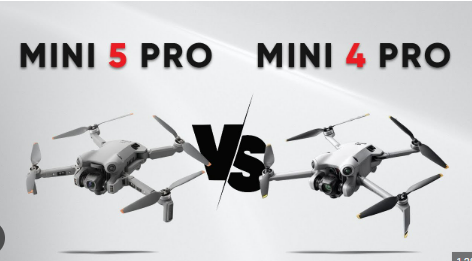
Quick Verdict: DJI Mini 4 Pro vs Mini 5 Pro

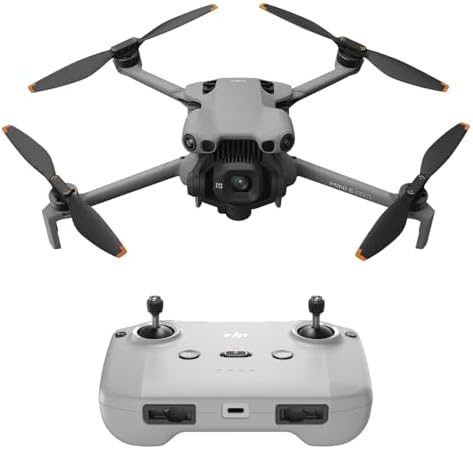
Here’s the short answer. The DJI Mini 5 Pro is the better drone, and for once the upgrade is real. It jumps to a bigger 1-inch camera sensor, adds LiDAR night sensing, flies a little faster, handles wind a little better, and, in the US, costs the same $759 as the Mini 4 Pro. If image quality is why you’re buying, especially in low light, the Mini 5 Pro is the pick.
But it’s not a clean sweep, and this is where most reviews go quiet. The Mini 4 Pro still makes sense in three cases: when you find it discounted (it now drops well below the 5 Pro), when you want the most dependable weight under 250 grams, and when you want a drone with fewer real-world caveats. The Mini 5 Pro’s headline flight time and weight both come with asterisks we’ll walk through.
One line to remember: the Mini 3 Pro to Mini 4 Pro jump was mostly software on the same camera. The Mini 4 Pro to Mini 5 Pro jump is the first true image-quality leap in the Mini line. Whether that leap is worth it depends entirely on what you shoot.
Editorial score (Mini 5 Pro): 9.3 / 10. Bottom line: the best sub-250g camera drone you can buy, held back only by wind and real-world flight time. At the same price as the Mini 4 Pro, you’re paying for the sensor, not the size.
| Best overall | Best value if discounted | Save more (older model) |
|---|---|---|
| Check Mini 5 Pro price on Amazon | Check Mini 4 Pro price on Amazon | See the Mini 3 Pro |
DJI Mini 4 Pro vs Mini 5 Pro: Full Specs Comparison Chart
Prices as of July 13, 2026. Drone stock and prices move fast, especially in the US right now (see the availability section). Always click through for the live price.
| Spec | DJI Mini 4 Pro | DJI Mini 5 Pro |
|---|---|---|
| US price (base controller) | About $759 | About $759 |
| Camera sensor | 1/1.3″ CMOS, 48 MP | 1-inch CMOS, 50 MP |
| Aperture | f/1.7 | f/1.8 (fixed) |
| Max video | 4K/60fps HDR + 4K/100fps slow motion | 4K/60fps HDR + 4K/120fps slow motion (1080p up to 240fps) |
| Dynamic range | Strong | Up to 14 stops (D-Log M) |
| Color | 10-bit D-Log M / HLG | 10-bit D-Log M / HLG |
| Obstacle sensing | Omnidirectional (vision) | Omnidirectional + forward LiDAR (night) |
| Gimbal | Standard 3-axis | 3-axis with 225° rotation |
| Transmission | O4, up to 20 km | O4+, up to 20 km |
| Internal storage | 2 GB | 42 GB |
| Wind resistance | About 10.6 m/s | About 12 m/s |
| Top speed (Sport) | 16 m/s | 18–19 m/s |
| Flight time (standard battery) | 34 min (real ~28) | 36 min (real ~24) |
| Flight time (Plus battery) | About 45 min | About 52 min (pushes weight over 250 g) |
| Takeoff weight | Under 249 g | 249.9 g (±4 g tolerance) |
| Controllers | RC-N2, RC 2 | RC-N3, RC 2 |
Sources are listed at the end. Where DJI’s marketing and independent testers disagreed, we used the independent number.
Quick decision? Check the live Mini 5 Pro price on Amazon or see how the discounted Mini 4 Pro compares.
- Ultra-Light, Palm-Sized Foldable Design – Compact and foldable, this palm-sized drone slips easily into a pocket and off…
- 1-Inch CMOS With 4K/60fps HDR Video – 1-inch CMOS sensor captures 4K/60fps HDR video with sharp detail and vibrant color…
- True Vertical Filming & 225° Flexible Gimbal Rotation – Capture creative footage with a gimbal that offers true vertical…

- 𝗨𝗻𝗱𝗲𝗿 𝟮𝟰𝟵 𝗴, 𝗡𝗼 𝗥𝗲𝗴𝗶𝘀𝘁𝗿𝗮𝘁𝗶𝗼𝗻 𝗜𝘀 𝗥𝗲𝗾𝘂𝗶𝗿𝗲𝗱[1] – Travel light and skip registration for a user-friendly, easy-to-carry expe…
- For the latest aircraft firmware, 𝘁𝗵𝗲 𝗥𝗲𝗺𝗼𝘁𝗲 𝗜𝗗 𝘄𝗶𝗹𝗹 𝗼𝗻𝗹𝘆 𝗯𝗲 𝗮𝗰𝘁𝗶𝘃𝗮𝘁𝗲𝗱 𝘄𝗵𝗲𝗻 𝘁𝗵𝗲 𝗜𝗻𝘁𝗲𝗹𝗹𝗶𝗴𝗲𝗻𝘁 𝗙𝗹𝗶𝗴𝗵𝘁 𝗕𝗮𝘁𝘁𝗲𝗿𝘆 𝗣𝗹𝘂𝘀 𝗶𝘀 𝘂𝘀𝗲𝗱….
- 𝗨𝗻𝗹𝗲𝗮𝘀𝗵 𝗦𝘁𝘂𝗻𝗻𝗶𝗻𝗴 𝗩𝗲𝗿𝘁𝗶𝗰𝗮𝗹 𝗩𝗶𝗱𝗲𝗼𝘀 𝗶𝗻 𝟰𝗞/𝟲𝟬𝗳𝗽𝘀 𝗛𝗗𝗥 – Perfectly showcases sunrise, sunset, and night scenes with impressive…
How We Compared the Mini 4 Pro and Mini 5 Pro
This comparison pulls from three sources, and we tell you which claim came from where:
- Official DJI specs from the product pages and spec sheets, for the hard numbers (sensor, transmission, flight time, weight).
- Independent reviews and hands-on tests from trusted outlets (Tom’s Guide, TechRadar, and others), for how those numbers feel in real flying.
- Real owner feedback from Reddit, DJI forums, and retailer reviews, for the faults that show up after weeks of use.
Our full scoring rubric is at the bottom of this page. No mystery numbers. The one thing we can’t give you is a same-day, same-place low-light flight with both drones. If you own either one and can share that footage, it’s the single piece of first-hand data that would make this page unbeatable.
The One Difference That Actually Matters: Sensor Size
Strip away the spec sheet and the whole decision comes down to one part: the camera sensor.
The Mini 4 Pro uses a 1/1.3-inch sensor. Good for its size, but small. The Mini 5 Pro uses a full 1-inch sensor, the same class DJI put in its pricier Air 3S. A bigger sensor gathers more light. That means cleaner images in low light, more detail to work with, and wider dynamic range (the Mini 5 Pro is rated up to 14 stops). Reviewers who shoot at dusk and night are near-unanimous that this is the first Mini where the camera feels good enough for paid client work.
Everything else in this comparison is a supporting detail. The sensor is the reason to spend up, or to skip the upgrade if you don’t care about it.
Camera and Video Quality: 1-Inch Sensor vs 1/1.3-Inch
In good daylight, both drones shoot lovely 4K. Put them side by side and the gap is real but not huge. The Mini 5 Pro pulls ahead in three places:
- Low light. This is the big one. The larger 1-inch sensor keeps noise down at dusk, at night, and indoors, where the Mini 4 Pro starts to look grainy.
- Slow motion. The Mini 5 Pro shoots 4K at 120fps (versus 100fps on the Mini 4 Pro) and 1080p up to 240fps, so slow-motion clips look smoother.
- Detail and grading room. 50 MP photos and up to 14 stops of dynamic range give you more to pull from in editing. Both do 10-bit D-Log M, so both grade well, but the 5 Pro’s files hold up better when pushed.
One honest catch on the Mini 5 Pro: the aperture is fixed at f/1.8. In bright daylight you’ll want ND filters to keep a natural shutter speed, or your motion can look choppy. That’s normal for this class, but budget for a filter set.
If you post clips straight to social and never edit, the Mini 4 Pro’s camera will still make you happy. If you grade footage or shoot in low light, the Mini 5 Pro’s video quality is the reason to buy it.
Obstacle Avoidance: LiDAR Night Sensing vs Standard Omnidirectional
Both drones have omnidirectional obstacle sensing, so they watch all directions in daylight. The Mini 5 Pro adds one thing the Mini 4 Pro can’t match: a forward-facing LiDAR sensor plus a downward infrared sensor. Together they let the drone see and avoid obstacles in the dark, down to very low light.
Why it matters: the Mini 4 Pro’s camera-based sensors get unreliable as the light drops, so night flying is riskier. The Mini 5 Pro’s LiDAR keeps working, and its Return-to-Home can retrace its exact path home through trees at dusk. Owners repeatedly call the night sensing the feature that makes evening flights feel safe.
One caveat to keep you honest: the LiDAR is forward-facing only. Sideways and backward, you’re still relying on the standard vision sensors, which weaken in the dark. It’s a real upgrade, not a magic shield.
Wind Resistance, Speed, and Flight Performance
The SERP is full of “wind resistance” and “speed” questions, so let’s be specific.
- Wind resistance: the Mini 5 Pro is rated around 12 m/s, versus about 10.6 m/s on the Mini 4 Pro. That’s roughly a 10% gain. In plain terms, the 5 Pro holds position a bit better in a breeze.
- Top speed: the Mini 5 Pro hits 18 to 19 m/s in Sport mode, versus 16 m/s on the Mini 4 Pro. Faster tracking shots, quicker to catch a moving subject.
- The honest limit: both are still sub-250-gram drones. In strong gusts, either one buffets, and that shake shows up in your footage. The single most common Mini 5 Pro owner complaint is exactly this: the light body gets pushed around in wind. If you fly coastal or exposed sites often, a heavier drone like the DJI Air 3S handles wind far better.
Battery Life and Real-World Flight Time
On paper, the Mini 5 Pro flies 36 minutes on the standard battery, versus 34 minutes on the Mini 4 Pro. In the real world, both fall short of their ratings, and the Mini 5 Pro falls further. Independent testers, including Philip Bloom, measured about 23 to 25 minutes of actual flying on the standard Mini 5 Pro battery. The Mini 4 Pro tends to land closer to 28 minutes.
There’s a catch with the long numbers, too. The advertised 52-minute flight time on the Mini 5 Pro needs the Intelligent Flight Battery Plus, and that heavier battery pushes takeoff weight to roughly 290 grams, over the 250-gram line. So you can have the long flight time or the registration-free weight, but not both at once. The Mini 4 Pro has the same trade-off with its Plus battery, just with slightly lower numbers.
Plan for about 20 to 25 minutes of real flying per standard battery on either drone, and buy the Fly More kit if you want a proper session.
Range and Transmission: O4+ vs O4
The Mini 5 Pro uses DJI’s newer O4+ transmission; the Mini 4 Pro uses O4. Both are rated up to 20 km in the US. In practice, the difference is tiny. As one respected reviewer put it, O4+ is a small step over O4, because your battery runs out long before you reach the signal limit. Both give a stable 1080p/60fps live feed. Don’t let “O4+” alone decide your purchase.
One genuine bonus on the Mini 5 Pro: 42 GB of internal storage versus 2 GB on the Mini 4 Pro. If you forget your microSD card, the 5 Pro can still record a real amount of 4K footage.
Weight, Size, and the Sub-250g Rule
Both drones are built to sit under 250 grams, which is the line that keeps recreational flying free of FAA registration in the US and simplifies rules across Europe. Both fold to about the size of a small water bottle.
Here’s a detail worth knowing before you buy the Mini 5 Pro: its rated weight is 249.9 grams with a give-or-take of about 4 grams. Some units actually weigh 252 to 253 grams. The US FAA allows no tolerance at the 250-gram line, so a slightly heavy unit technically needs registration. It takes five minutes and costs a few dollars, so it’s not a dealbreaker, but weigh your drone if staying registration-free matters to you. The Mini 4 Pro sits a hair more comfortably under the line.
Price: Why the Mini 5 Pro Costs the Same as the Mini 4 Pro
This is the fact that decides most purchases. In the US, both drones launched at the same $759 base price. So when you choose the Mini 5 Pro, you’re not paying extra for the size or the brand. You’re paying the same money for a much bigger sensor and newer tech.
That’s why, at full price, the Mini 5 Pro is usually the smarter buy. The only time the math flips is when the older Mini 4 Pro goes on sale, which it now does regularly. If you can find a new Mini 4 Pro for $150 or more below the Mini 5 Pro, and you don’t need the 1-inch sensor’s low-light edge, the savings are real. Check the current Mini 4 Pro price and compare it to the live Mini 5 Pro price before you decide.
DJI Mini 4 Pro vs Mini 5 Pro: Pros and Cons
Good: Much bigger 1-inch sensor with clearly better low-light and dynamic range. LiDAR night obstacle sensing. 225° rotating gimbal for easy vertical shots. 4K/120fps slow motion. Faster, slightly better in wind. 42 GB internal storage. Same $759 price as the Mini 4 Pro.
Not so good: Real flight time is short (about 24 minutes on the standard battery). Light body buffets in gusts, the top owner complaint. Weight runs right at the 250-gram line, so some units need US registration. Fixed f/1.8 aperture needs ND filters. Many Amazon listings are third-party sellers without a US warranty.
DJI Mini 4 Pro
Good: Still an excellent all-rounder. Omnidirectional sensing. Reliable O4 link. 4K/100fps and 10-bit color. Sits comfortably under 250 grams. Now frequently discounted below the Mini 5 Pro.
Not so good: Smaller 1/1.3-inch sensor, so it can’t match the 5 Pro in low light. No LiDAR, so night sensing is weaker. No 225° gimbal. Only 2 GB internal storage. At full price, it’s outclassed by the same-priced Mini 5 Pro.
Who Should Buy the DJI Mini 5 Pro?
- Anyone who shoots in low light (dusk, night, indoors). The 1-inch sensor and LiDAR sensing are built for exactly this.
- Content creators and semi-pros who grade footage, shoot slow motion, or need the extra detail for client work.
- Buyers paying full price. At the same $759 as the Mini 4 Pro, the 5 Pro simply gives you more.
- Vertical-video creators who want the 225° gimbal for quick, clean portrait shots.
If that’s you, check the current Mini 5 Pro price on Amazon, and read the availability section first so you buy from the right seller.
Who Should Buy the DJI Mini 4 Pro Instead?
- Bargain hunters. If the Mini 4 Pro is discounted well below the 5 Pro and you don’t need the low-light edge, the savings are real.
- Daylight and open-area flyers who mostly shoot in good light, where the sensor gap is smallest.
- Anyone who wants the most dependable sub-250g weight without weighing each unit.
If that sounds like you, check the Mini 4 Pro price on Amazon and only pull the trigger if it’s clearly cheaper.
Who Should Skip Both Drones?
Be honest with yourself here.
- If you fly in strong wind often (coastal, cliffs, exposed ridges), neither Mini is ideal. A heavier drone like the DJI Air 3S holds position far better, with longer flight time and a zoom camera, though it costs more and needs registration.
- If you want to save the most money, the older DJI Mini 3 Pro still takes excellent photos and can be found used for less. It lacks the 5 Pro’s low-light muscle and the 4 Pro’s newest features, but it’s a lot of drone for the price. See the Mini 3 Pro here.
- If you only want casual, occasional shots, the non-Pro DJI Mini 4K costs about a third of the Mini 5 Pro and still shoots 4K.
How the Mini 3 Pro Fits In (Quick Three-Way Note)
A lot of shoppers land here after reading about the Mini 3 Pro, so here’s the short version. The Mini 3 Pro and Mini 4 Pro share the same 1/1.3-inch camera; the 4 Pro just adds better sensing, transmission, and video modes. The Mini 5 Pro is the only one of the three with a true 1-inch sensor and LiDAR. So the ladder is simple: Mini 3 Pro for value, Mini 4 Pro for the middle, Mini 5 Pro for the best image quality. If low light matters, skip straight to the 5 Pro.
Real Cost of Ownership: What You’ll Actually Spend
Sticker price isn’t the real cost. Here’s a realistic first-year budget for the Mini 5 Pro:
- Drone and controller: about $759 new (base). A screen controller (DJI RC 2) bundle costs more and is worth it for outdoor visibility.
- Fly More kit: about $300 more adds two extra batteries, a charging hub, ND filters, and a bag. Since real flight time is around 24 minutes per battery, three batteries is the difference between a demo and an actual shoot. Most people should get the Combo.
- ND filters: needed for the fixed f/1.8 aperture in daylight. Often included in the Combo.
- DJI Care Refresh: worth budgeting for. The gimbal is the most fragile part of any drone, and Care Refresh makes replacements far cheaper than an out-of-warranty repair.
- A microSD card and landing pad: small, but real (the 42 GB internal storage helps if you forget the card).
Add it up and a “$759 drone” is really a $1,100 to $1,300 kit once you’re flying it well. That’s the honest number, and it’s about the same for the Mini 4 Pro.
Can You Buy the DJI Mini 5 Pro in the US in 2026?
Yes, but read this first, because it’s where buyers get burned.
On the rules: the FCC added DJI to its Covered List in December 2025, which blocks approval of brand-new DJI models but does not ground or ban drones already approved. Existing stock, including the Mini 4 Pro and Mini 5 Pro, remains legal to buy and fly, and firmware support runs to at least January 2029. There’s no remote shutdown.
On the seller: this matters more than the politics. Many Amazon listings for the Mini 5 Pro are third-party or grey-market sellers, not DJI or Amazon directly. Some ship without a US warranty, and a few have poor reviews for wrong or missing items. Buy from an authorized US retailer so you get the real US warranty and DJI Care Refresh support. Check who the seller is before you click buy, and confirm current stock, which comes and goes. Outside the US, both drones are widely available through normal channels.
The Honest Verdict: Which DJI Mini Drone Wins?
The Mini 5 Pro wins, and it earns our 9.3. For the same $759 as the Mini 4 Pro, you get a genuinely bigger 1-inch sensor, LiDAR night sensing, faster flight, better wind handling, and far more internal storage. It’s the best sub-250g camera drone you can buy, and the first Mini where the camera feels pro-grade.
The Mini 4 Pro is still a great drone, and it becomes the smart-money pick the moment it’s discounted below the 5 Pro, or if you mostly fly in daylight and want the most dependable weight. But at equal price, the choice is clear.
Just go in with eyes open on the Mini 5 Pro’s two real weaknesses: short real-world flight time (plan for about 24 minutes per standard battery) and wind buffeting in gusts. Neither is a dealbreaker for most buyers, but both are worth knowing before you spend.
Best alternative if you skip both: the DJI Air 3S (for wind and endurance) or the DJI Mini 3 Pro / Mini 4K (for pure budget).
| Ready to decide? | Buy link |
|---|---|
| Best overall camera drone | Check the Mini 5 Pro on Amazon |
| Best value if discounted | Check the Mini 4 Pro on Amazon |
| Save more (older model) | See the Mini 3 Pro |
How We Scored the DJI Mini 5 Pro
| Criterion | Weight | Score (/10) | Notes |
|---|---|---|---|
| Camera and video quality | 30% | 9.7 | 1-inch sensor is a real jump, best low-light in the class |
| Obstacle safety | 20% | 9.5 | LiDAR night sensing leads the category |
| Wind and flight performance | 15% | 8.5 | Faster and steadier, but still buffets in gusts |
| Battery and real flight time | 15% | 8.0 | About 24 minutes real-world, short of the 36-minute claim |
| Portability and weight | 10% | 8.5 | Tiny, but runs right at the 250-gram line |
| Value at current price | 10% | 9.5 | Same $759 as the Mini 4 Pro for far more drone |
Weighted total: 9.3 / 10. This is an editorial score built from specs, independent tests, and owner feedback, not from our own flight test.
DJI Mini 4 Pro vs Mini 5 Pro: FAQs
What is the difference between the DJI Mini 4 Pro and Mini 5 Pro?
The biggest difference is the camera sensor. The Mini 5 Pro uses a larger 1-inch sensor, versus the Mini 4 Pro’s 1/1.3-inch, so it captures more detail and much cleaner low-light footage. The Mini 5 Pro also adds forward LiDAR for night obstacle sensing, a 225-degree rotating gimbal, 4K/120fps slow motion, faster flight, better wind resistance, and 42 GB of internal storage. In the US, both cost about $759.
Is the Mini 5 Pro worth the upgrade over the Mini 4 Pro?
At full price, yes, because both cost the same $759 and the Mini 5 Pro gives you a bigger sensor and newer tech for the same money. The main reason to stay with the Mini 4 Pro is a real discount, since it now regularly sells for less. If you shoot in low light, the Mini 5 Pro is the clear choice.
Is the camera and video quality better on the Mini 5 Pro?
Yes, especially in low light. The 1-inch sensor keeps noise low at dusk and night where the Mini 4 Pro gets grainy, and it offers up to 14 stops of dynamic range. It also shoots 4K/120fps slow motion versus 4K/100fps. In bright daylight the gap is smaller, and casual shooters may not notice it.
How do the prices of the Mini 4 Pro and Mini 5 Pro compare?
In the US, both launched at about $759 for the base controller version, with Fly More bundles costing more. Because they share a starting price, the Mini 5 Pro is usually the better buy at full price. The Mini 4 Pro only wins on value when it’s discounted below the 5 Pro, which it now often is. Always check the live price before buying.
Which has better obstacle avoidance, the Mini 4 Pro or Mini 5 Pro?
Both have omnidirectional vision sensing for daylight. The Mini 5 Pro adds a forward-facing LiDAR sensor that lets it detect obstacles in the dark, which the Mini 4 Pro cannot do reliably. The catch is that the LiDAR is forward-facing only, so sideways and backward night sensing still leans on the standard cameras.
Which drone has better wind resistance?
The Mini 5 Pro is rated at about 12 m/s versus roughly 10.6 m/s on the Mini 4 Pro, so it holds position slightly better in a breeze. That said, both are light sub-250g drones and both buffet in strong gusts, which shows up as shaky footage. For serious wind, a heavier drone like the DJI Air 3S is a better tool.
Which is faster, and what is the top speed?
The Mini 5 Pro is faster. It reaches about 18 to 19 m/s in Sport mode, versus 16 m/s on the Mini 4 Pro. That helps with tracking fast subjects and getting into position quickly. For most casual flying, the difference is minor.
What is the battery life and real flight time?
DJI rates the Mini 5 Pro at 36 minutes and the Mini 4 Pro at 34 minutes on the standard battery, but real-world numbers are lower. Independent testers measured about 23 to 25 minutes on the Mini 5 Pro and closer to 28 on the Mini 4 Pro. The advertised 52-minute Mini 5 Pro figure needs the heavier Plus battery, which pushes weight over 250 grams. Plan for a Fly More kit with extra batteries.
Which drone has longer range?
Both are rated up to 20 km in the US, with the Mini 5 Pro using the newer O4+ system and the Mini 4 Pro using O4. In practice the difference is very small, since your battery runs out long before you reach the signal limit. Both deliver a stable 1080p/60fps live feed, and you should keep the drone in sight anyway.
How much do they weigh, and do they need registration?
Both are built to stay under 250 grams to skip FAA registration for recreational flying in the US. The Mini 4 Pro sits comfortably under the line. The Mini 5 Pro is rated 249.9 grams with a give-or-take of about 4 grams, so some units weigh slightly over 250 grams, which technically needs registration since the FAA allows no tolerance. Weigh your unit if staying registration-free matters.
Is the DJI Mini 5 Pro good for beginners?
Yes. Its omnidirectional and LiDAR sensing make it forgiving of beginner mistakes, and it’s easy to fly. The main downsides for a first-timer are the cost and the need for ND filters in daylight. New pilots on a budget could also start with the cheaper Mini 4K or a toy drone to learn the sticks first.
Should I get the Mini 3 Pro instead to save money?
You can, if budget is the priority. The Mini 3 Pro still shoots excellent photos and can be found used for less than both newer models. You give up the Mini 5 Pro’s 1-inch sensor and low-light strength and the Mini 4 Pro’s newest features, but for daylight shooting in open areas it’s a lot of drone for the money.
Can you buy the DJI Mini 5 Pro in the US in 2026?
Yes. Despite the FCC adding DJI to its Covered List in December 2025, drones approved before then stay legal to buy and fly, and retailers can sell existing stock. The bigger issue is the seller: many Amazon listings are third-party or grey-market and may lack a US warranty. Buy from an authorized US retailer for full warranty and DJI Care Refresh support.
Is the Mini 5 Pro’s low-light and night performance really better?
Yes, and it’s the main reason to choose it. The larger 1-inch sensor produces cleaner night and dusk footage with less noise, and the LiDAR sensing lets the drone fly and return home safely in the dark. Owners and professional reviewers consistently single out low-light performance as the Mini 5 Pro’s standout strength.
Is DJI Care Refresh worth it, and what about warranty?
For a fragile 249-gram flying camera, most owners find Care Refresh worth it, since gimbal faults and crash damage are otherwise costly to repair. It lowers replacement costs a lot. Just make sure you buy from an authorized seller in the first place, because grey-market units often don’t qualify for the US warranty or Care Refresh.
About This Review
This comparison was produced by our gear editorial team using DJI’s official specs, independent hands-on reviews from trusted drone outlets, and real owner feedback from Reddit, DJI forums, and retailer reviews. We have not run our own side-by-side flight test of these two units, and we say so plainly instead of implying testing we didn’t do. Our pick ranks by what serves the reader, not by commission.